Home › What’s covered › Arithmetic World
Arithmetic World
Arithmetic World covers the number skills in KS2 Paper 1: place value, mental adding and taking away, the written column methods, multiplication, division and calculating with fractions.
Method cards show each written method one step at a time, and “Show me how” walks through long multiplication and long division with your child.
Years 3 and 4: getting started
The Year 3 and 4 skills. Younger children start here, and older children can use them for a recap.
Place value to 1,000
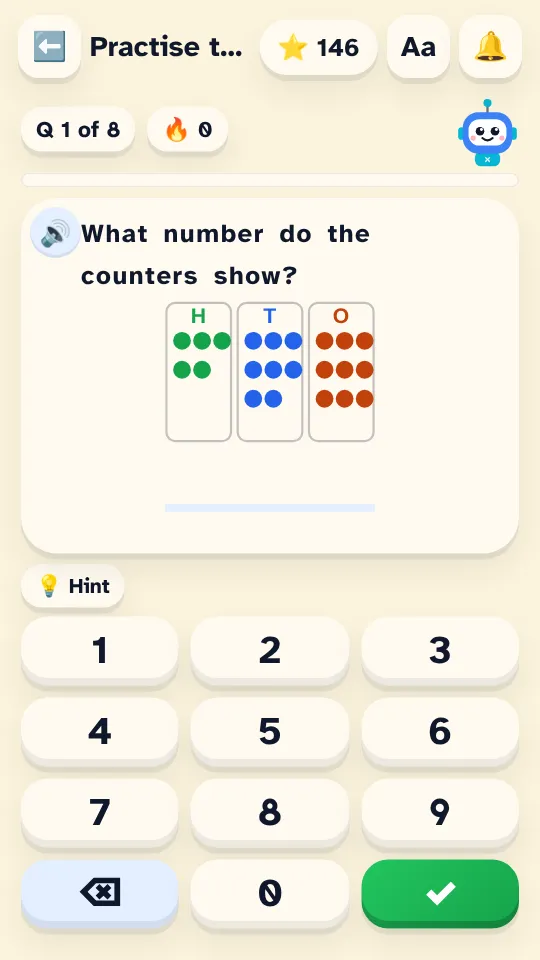
Hundreds, tens and ones. Find 1, 10 or 100 more or less.
- read the counters
- value of a digit
- hundreds + tens + ones
- 1, 10, 100 more or less
Place value to 10,000 and rounding
Thousands, hundreds, tens and ones. Round to the nearest 10, 100 or 1,000.
- value of a digit
- 1,000 more or less
- rounding
Adding and taking away in your head
Add or take away ones, tens or hundreds from a 3-digit number.
- add or take away ones
- add or take away tens
- add or take away hundreds
- add 9 or 11
Column methods: 3-digit numbers
Add and take away 3-digit numbers in columns.
- 3-digit + 3-digit
- 3-digit + 2-digit
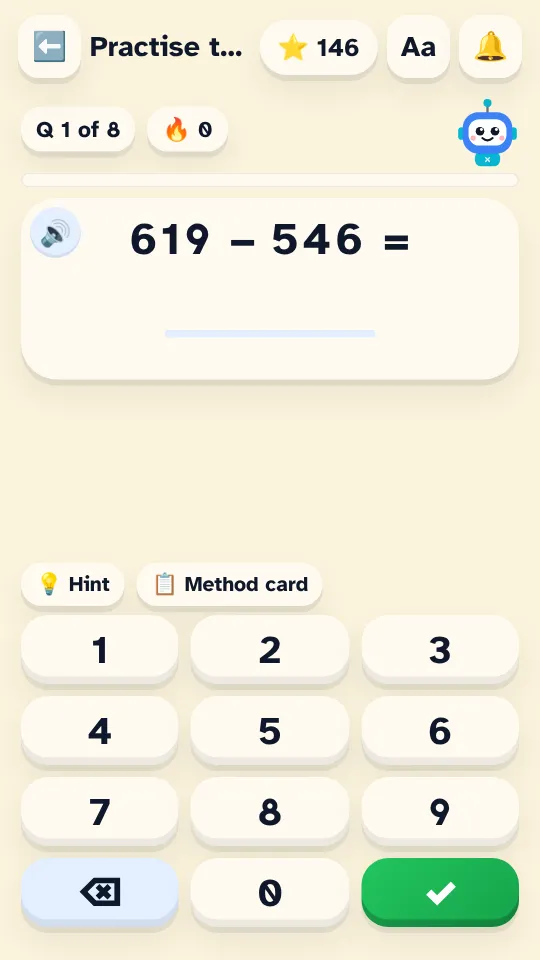
- 3-digit − 3-digit
Multiplying 2-digit numbers
Multiply a 2-digit number by a 1-digit number. Split it into tens and ones.
- × 2, 3, 4, 5, 8 or 10
- any 2-digit × 1-digit
- three numbers
Dividing and remainders
Divide using your times tables. Sometimes there is some left over: a remainder.
- using times tables
- 2-digit ÷ 1-digit
- remainders
Negative numbers
Count back past zero. Numbers below zero have a minus sign.
- count back past zero
- sequences
- temperature
Roman numerals
I = 1, V = 5, X = 10, L = 50, C = 100. A smaller one before a bigger one means take it away.
- I to XII, like on a clock
- up to 100
- write it in Roman numerals
Years 5 and 6: next steps
The Year 5 and 6 skills, building up to the KS2 SATs.
× and ÷ by 10, 100, 1000
Multiply and divide by 10, 100 and 1000. Digits move left or right.
- × whole numbers
- ÷ whole numbers
- × decimals
- ÷ to make decimals
Mental adding and taking away
Add and take away in your head. Use tens and ones, or round and adjust.
- add 2-digit numbers
- take away 2-digit numbers
- add big round numbers
- take away from round numbers
Column addition
Add big numbers in columns. Start on the right and carry.
- 4-digit + 4-digit
- 5-digit + 4-digit
- 6-digit numbers
- three numbers
Column subtraction
Take away big numbers in columns. Exchange when the top digit is smaller.
- 4-digit − 4-digit
- 5-digit − 4-digit
- 6-digit numbers
- numbers with zeros
Short multiplication
Multiply a big number by a 1-digit number. Carry as you go.
- 3-digit × 1-digit
- 4-digit × 1-digit
Long multiplication
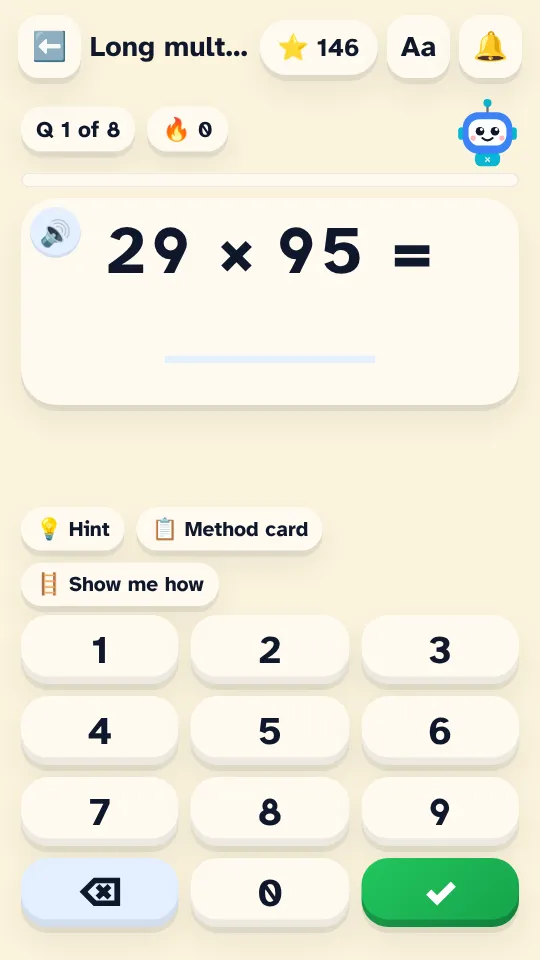
Multiply by a 2-digit number. Two rows, then add. "Show me how" can walk you through.
- 2-digit × 2-digit
- 3-digit × 2-digit
- 4-digit × 2-digit
Short division
Divide by a 1-digit number (or 11 and 12) with the bus stop method.
- 3-digit ÷ 1-digit
- 4-digit ÷ 1-digit
- ÷ 11 or 12
Long division
Divide by a 2-digit number. List the multiples first. "Show me how" can walk you through.
- 3-digit ÷ 2-digit
- 4-digit ÷ 2-digit
Order of operations
Brackets first. Then × and ÷. Then + and −.
- + and ×
- brackets
- − and ÷
- two × parts
Square and cube numbers
Squared means × itself. Cubed means × itself, then × itself again.
- squared
- cubed
- squares and cubes together
Decimals
Add, take away and multiply decimals. Line up the decimal points.
- adding decimals
- taking away decimals
- × by a 1-digit number
Adding fractions: same bottom
When the bottom numbers are the same, add or take away the top numbers.
- adding
- taking away
- simplest form
Fractions: different bottoms
Make the bottom numbers the same first. Then add or take away.
- one bottom fits the other
- take away, one bottom fits
- find a common bottom
Mixed numbers
Add and take away mixed numbers like 2 and a quarter.
- adding
- taking away
- whole number − fraction
Multiplying fractions
Fraction × fraction: tops times tops, bottoms times bottoms. Fraction × whole: times the top.
- fraction × fraction
- fraction × whole number
Dividing fractions
Divide a fraction by a whole number. Make the bottom number bigger.
- top divides easily
- any fraction ÷ whole
Fractions of amounts
To find a fraction of an amount: divide by the bottom, then times by the top.
- 1/something of
- 3/5 of… and more
Percentages of amounts
Find 10% by dividing by 10. Build other percentages from 10%, 5% and 1%.
- 10%, 50%, 25%, 1%
- 20%, 5%, 15%, 75%…
- 35%, 12%, 65%…
How Arithmetic World works
- A short, no-pressure quick check finds the right starting point. It isn’t a test.
- Every question can be read aloud, and hints show a picture first.
- Each level has its own boss battle, unlocked once your child has had plenty of practice.
- Practice is untimed.