For Years 5 and 6 · Free
KS2 SATs maths at your own pace.
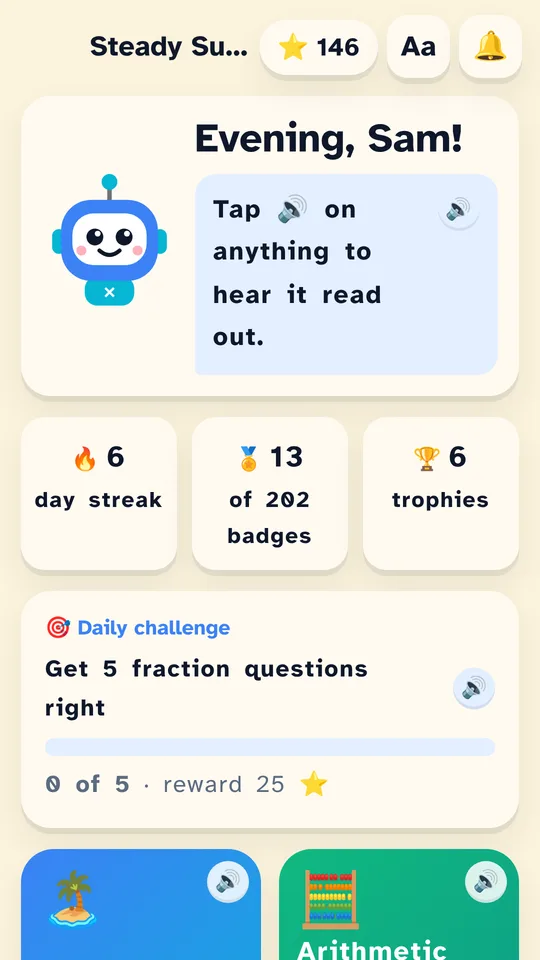
Calm, untimed practice with every question read aloud. Built for dyslexic learners, and kind to every child who finds maths stressful.
- No ads
- No accounts
- Works offline
- Nothing leaves the phone
No timers
Practice is untimed. Children think things through instead of racing a clock.
Everything read aloud
Nova reads every question, highlighting each word as it goes.
Dyslexia-friendly
Clear fonts, coloured pages, extra spacing and a reading ruler, chosen by your child.
Private by design
No ads, no sign-up, no tracking. Progress stays on your child’s device.
WHY STEADY SUMS EXISTS
Built by a dad, for his daughter
My daughter is dyslexic and in Year 6, getting ready for her KS2 SATs. She has extra time in her tests, yet so much maths practice is built around beating the clock.
I wanted something calmer for her: questions read aloud, writing she can see clearly, and help that explains a method step by step rather than just marking an answer. So I built Steady Sums with her in mind.
Now I’m sharing it, so other families can use it too.
Dave, dad and creator of Steady Sums
How it works
Three simple steps, and your child stays in charge of how it looks and sounds.
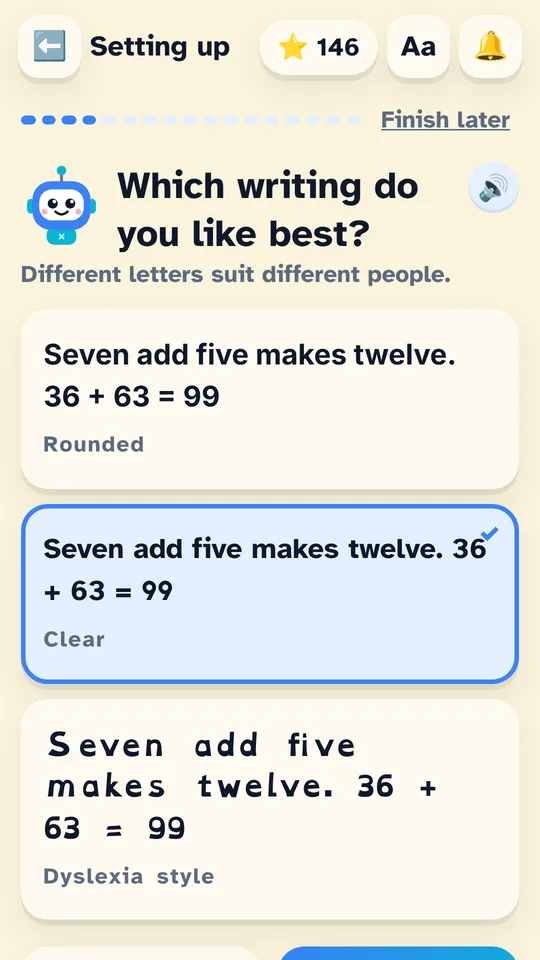
A setup made for them
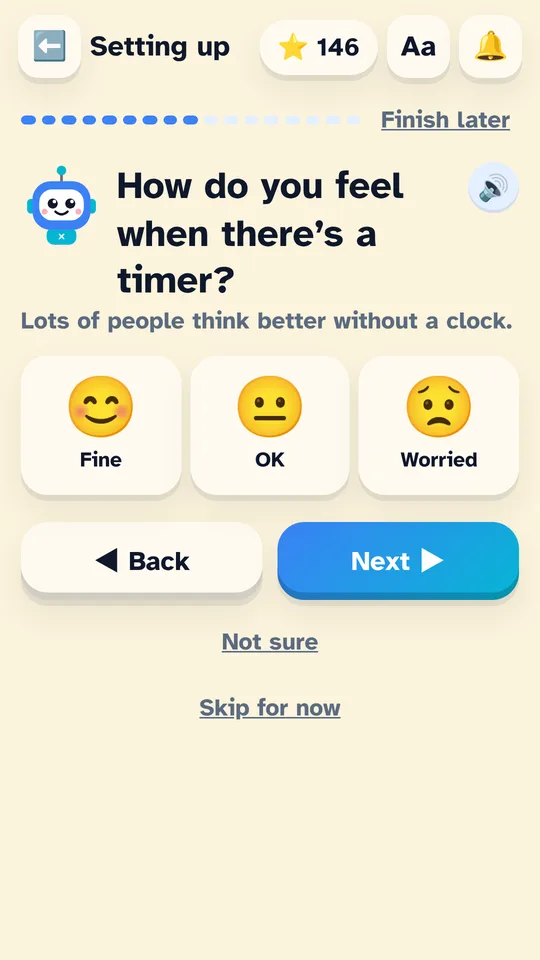
Instead of asking about diagnoses, Steady Sums shows choices: which writing is easiest, which page colour, how fast Nova should talk. It takes about 10 minutes.
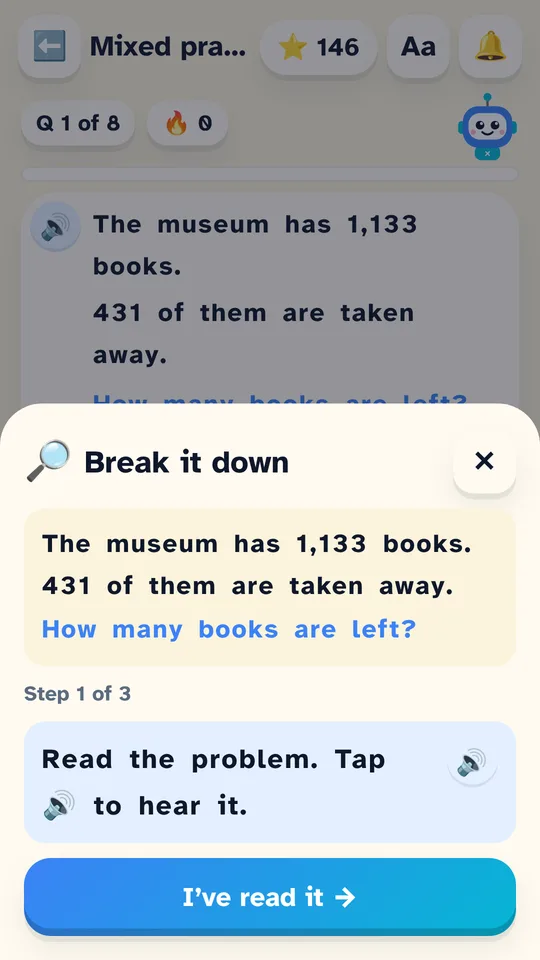
Calm practice with real help
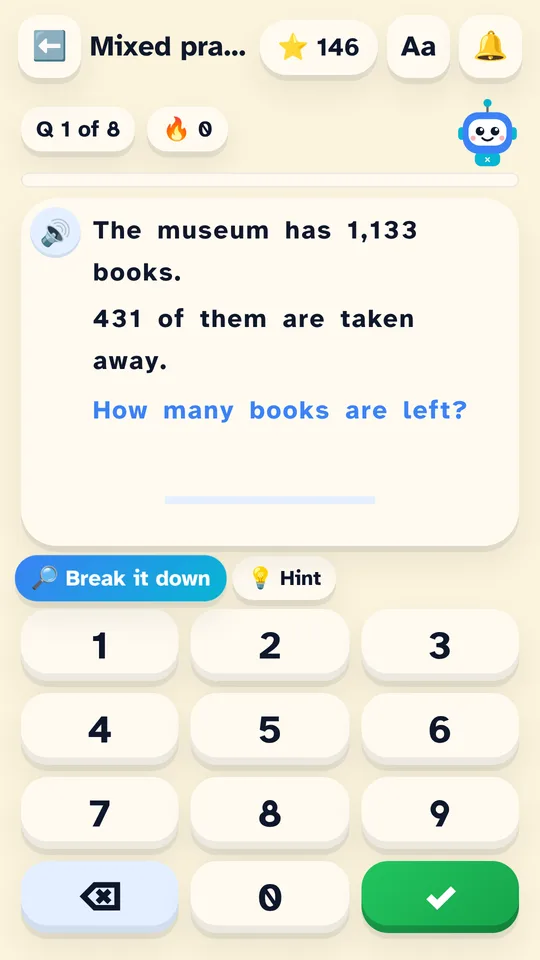
Short rounds with no clock. Stuck? Break it down splits a word problem into steps, and method cards show written methods one step at a time.
Progress you can share
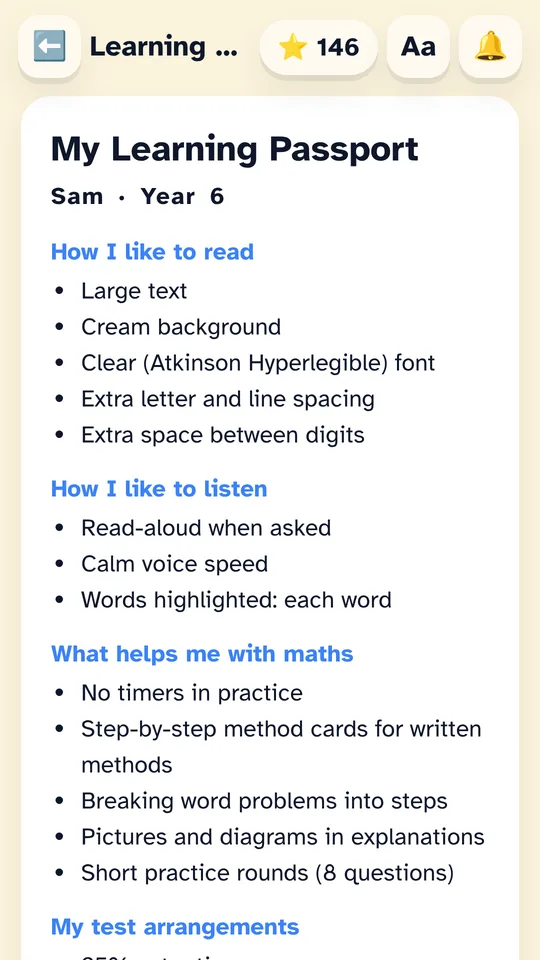
Grown-ups see what’s improving and what to practise next, and can share a one-page Learning Passport with school.
Dyslexia-friendly from the first tap
Every option is shown, not described, so children pick what genuinely feels easier. Everything can be changed later with one button.
Read aloud, word by word
Each word lights up as it’s spoken. Choose a calm, medium or quick voice.
Three writing styles
Rounded, Clear (Atkinson Hyperlegible) or a dyslexia-style font (OpenDyslexic).
Coloured pages
Cream, pale blue, yellow, green or pink backgrounds, or plain white.
Room to read
Larger text, extra letter and line spacing, and space between digits so 36 doesn’t become 63.
Reading ruler
Shows one line at a time, for children who lose their place.
Place-value colours
Optional colours for ones, tens and hundreds, so big numbers are easier to read.
Pictures first
Hints lead with dots, number lines and bar models before words.
Gentle mode
No hearts to lose and extra encouragement, for children who worry about mistakes.
The whole of KS2 maths, in seven worlds
A quick, no-pressure check finds the right starting point in each world. Levels unlock as confidence grows.
Times Quest
Times tables and division facts up to 12 × 12.
Arithmetic World
Place value and the four operations, including long multiplication and division.
Fraction Forest
Fractions, decimals and percentages.
Reasoning Reef
Word problems, solved one step at a time.
Measure Mountains
Measurement, money, time and reading scales.
Shape Shore
Geometry: shapes, angles, coordinates and position.
Data Desert
Tables, charts, graphs and averages.
SATs-style papers
Three practice papers in the KS2 format: arithmetic and two reasoning papers, with extra time if your child has it.
For parents and carers
A PIN-protected Grown-ups area keeps the controls with you.
- Matches their test arrangements. Extra time, a reader and rest breaks carry through to the practice papers.
- Learning Passport. A one-page summary of how your child likes to learn, ready to share with their teacher. No scores, no diagnosis.
- What we’ve noticed. Plain-English notes on progress, the help they use, and how practice is feeling.
- Year 5 or Year 6. Year 6 shows a gentle SATs countdown. Year 5 gets the same practice without it.
Nothing leaves the phone
There are no accounts, no ads and no tracking. Your child’s progress is stored only on their device, and works without internet. If you change phones, you save a backup file yourself, and it stays with you.
Questions parents ask
Is it really free?
Yes. Steady Sums is currently free, with no ads and no in-app purchases.
Is it only for children with dyslexia?
No. It suits any child who would benefit from calm, untimed practice. The dyslexia-friendly options are simply there when they help.
Does it work on iPhone or iPad?
Steady Sums is coming to Google Play first. On iPhone and iPad you can use it from Safari: open the app’s page, tap Share, then Add to Home Screen.
Does it need the internet?
Only to install it. After that it works offline, so it’s fine in the car or on holiday.
Is it connected to the official SATs?
No. Steady Sums offers SATs-style practice based on the KS2 national curriculum. It isn’t affiliated with the Department for Education or the Standards and Testing Agency.
Practice that feels steady, not stressful
Steady Sums is coming soon to Google Play. Free, with no ads and no accounts.
Coming soon to Google Play